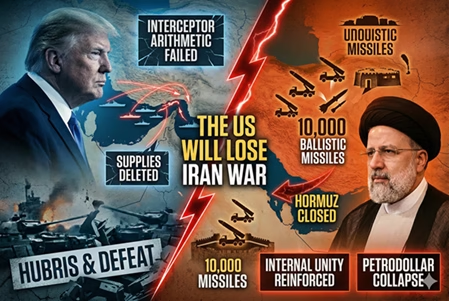

The world is watching in shock as a “quick knockout blow” transforms into a nightmare of strategic miscalculation. What was supposed to be a swift regime change has devolved into a grueling war of attrition. From underground missile cities to the collapse of global oil routes, the evidence is mounting that the US will lose Iran war if the current “brutal arithmetic” continues.
Table of Contents
The Nightmare of Interceptor Math
A primary reason experts fear the US will lose Iran war is the lopsided cost of modern combat. Iran possesses an arsenal of over 10,000 ballistic missiles and drones hidden in fortified, mobile underground shelters.
The U.S. and Israel are currently trapped in a losing game of “interceptor math.” To stop a single Iranian projectile, the U.S. often fires two high-cost interceptors like the Patriot or THAAD.
- The Supply Gap: Iran can produce hundreds of missiles every month.
- The U.S. Shortage: The U.S. industrial base only produces 600 to 750 Patriot interceptors per year.
At this rate, American defensive supplies could be exhausted in just weeks. The scarcity is so severe that the U.S. is already diverting resources from Ukraine and considering disarming allies like South Korea just to stay in the fight.
Click on the picture below to Open Demat account with Zerodha

A Total Miscalculation of Iranian Unity
The belief that the Iranian people would turn against their government during an attack has proven to be a fatal error. Instead of collapsing, the external aggression has unified the Iranian people and hardened their resolve.
History shows that Iran is a “centuries-old culture” defined by defiance. From the 1953 CIA-led coup to the devastating eight-year war with Iraq, the leadership in Tehran—led by disciplined strategist Ali Khamenei—has spent decades building a “fortress.” They have proven that they believe the West only respects strength, making it increasingly likely the US will lose Iran war by underestimating their opponent’s spirit.
Economic Chaos and the Petrodollar Collapse
The geopolitical fallout of this conflict is reaching every corner of the globe. By swiftly closing the Strait of Hormuz, Iran has disrupted 21% of the world’s oil flow. This move directly threatens the stability of the petrodollar system.
Furthermore, the Gulf States (GCC) are facing an existential crisis. Iran has begun targeting:
- Energy Infrastructure: Paralyzing regional oil production.
- Desalination Plants: These facilities provide 60% of the fresh water for the region.
If the lifeblood of America’s allies is cut off, the strategic exhaustion will accelerate, further proving why many believe the US will lose Iran war.

Logistical Nightmares and Ground War Fears
The U.S. Navy is facing a logistical “calamity.” With regional ports like those in Bahrain damaged or lost, aircraft carriers must travel as far as Diego Garcia just to reload missiles.
History rarely shows a war won by air power alone. If the U.S. cannot achieve its goals from the sky, it faces the terrifying prospect of deploying ground troops. Given Iran’s difficult geography, massive population, and the current limits of U.S. army strength, an invasion could lead to total strategic failure.
The Final Outcome
As Israel “drives the boat” of U.S. foreign policy and domestic leaders seek emergency war powers, the reputational damage to the American military continues to grow. Without a negotiated settlement on Iran’s terms, the U.S. may eventually be forced to simply “declare victory” and withdraw to prevent a total collapse. Unless the strategy shifts, the brutal arithmetic suggests the US will lose Iran war.
Disclaimer: The information provided in this article is for educational and informational purposes only and should not be considered financial or investment advice. Market outlooks, projections, and opinions are based on publicly available data at the time of writing and may change without notice due to evolving market conditions. Readers are advised to conduct their own research or consult a qualified financial advisor before making any investment decisions. The author and publisher are not responsible for any financial losses arising from the use of this information.

